

In industrial automation settings, inductive proximity sensors are almost ubiquitous. They can detect:
✅ Whether the workpiece is in place#Telemecanique
✅ Whether the part is present#Sensor#Xiamen Shengyuanke Trading Co., Ltd.
✅ Whether the mechanism has reached the designated position
✅ Whether the conveyor belt is operating normallyBlog
It seems like a simple sensor, but if the wrong type is chosen, it can lead to unstable detection at best, and affect the operation of the entire equipment at worst.
So here comes the question: When faced with various models, sizes and parameters in the market, how should one choose an inductive proximity sensor? Actually, there’s no need to memorize the parameters. Just remember the following 4 key questions, and you won’t make a wrong choice.Home
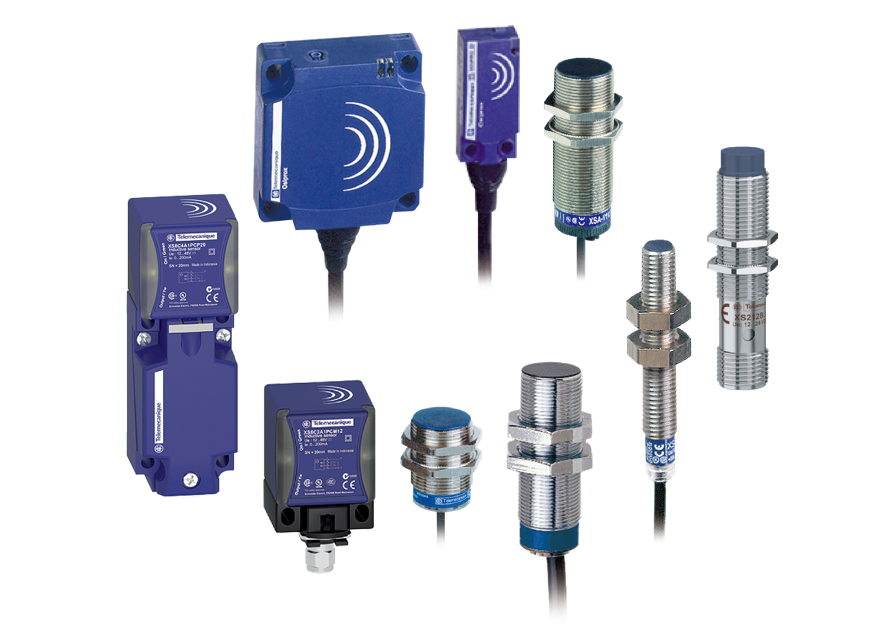
Step 1: What to detect? How far away?Contact Us
This is the first issue that needs to be clarified during the selection process. Inductive proximity sensors are specifically designed for detecting metal targets. The detection distances of different models vary significantly, ranging from miniature cylinders to large square products, from a few millimeters to 60mm, and corresponding models are available for selection.
Generally speaking: The larger the size, the farther the detection distance, but this also means a greater demand for installation space. Therefore, during the selection process, it is necessary to first confirm:
How far is the object being measured from the sensor?
Is the installation space restricted?
Step 2: How to choose the installation method?
This is a problem that many engineers tend to overlook. For instance, if a proximity sensor is installed on a steel plate, or if there are a lot of metal structures around the sensing surface, special attention must be paid to the installation method.
Generally speaking: The embedded type is suitable for installation environments with metal surrounding, and the sensor can be installed flush with the metal. The non-embedded type has a longer detection distance, but a certain space needs to be reserved around.
Simple memory:
1、 To be flush for collision prevention choose embedded
2、For distance selection choose non-embedded
Step 3: Are the electrical parameters compatible?
For the same size and detection distance of inductive proximity sensors, different models may have completely different power supply methods, wiring methods and output types. The Telmerico Sensor XS series offers 2-wire, 3-wire and 4-wire products and supports DC, AC and AC-DC universal power supply; according to the control system requirements, one can also choose NPN or PNP output, NO normally open or NC normally closed, as well as analog output and other different forms.
Therefore, before making a selection, it is necessary to confirm:
What is the power supply type and voltage of the equipment?
What devices or control loops does the sensor need to be connected to?
What wiring method and output form is needed?
Step 4: Is the environment unique?
The operating environment directly affects the detection stability, reliability and lifespan of the sensor. Besides the detection target, when selecting the model, it is also necessary to confirm whether there are any special working conditions on site:
?? Humid environment
?? High-pressure flushing
❄ Low-temperature environment
?? High-temperature environment
⚡ Strong electromagnetic interference
For different working conditions, the Teleremco Sensor XS series offers a wide range of professional model options, such as:
✅ IP68/IP69K high protection level models
✅ TF low-temperature models
✅ TT high-temperature models
✅ XS9C series resistant to strong magnetic interference
✅ Stainless steel series for the food and beverage industry
When selecting the equipment, not only the detection requirements should be considered, but also the actual operating environment of the equipment should be taken into account.
There is another parameter that should not be forgotten for high-speed equipment. If the equipment operates at a high speed, the switching frequency also needs to be paid attention to, such as high-speed counting, high-speed conveying lines, high-speed rotating equipment, etc. If the target movement speed exceeds the response capability of the sensor, there may be missed detections.
Generally speaking: The longer the detection distance and the larger the size of the sensor, the lower the switching frequency. Therefore, for high-speed application scenarios, the product parameters must be confirmed in advance.
Standard model naming rule

When choosing an inductive proximity sensor, ask yourself the following 4 questions:
✅ What is being detected? How far is the distance?
✅ How to select the installation method?
✅ Are the electrical parameters compatible?
✅ Is the environment special?
By clarifying these 4 questions, 80% of the selection process will be basically completed.